Rastoke is one of the most fascinating places to visit near Plitvice Lakes. It is a place where waterfalls, old watermills and stories of fairies intertwine with the rich history of Slunj. Discover what to see in Rastoke, how the Slunjčica River shaped the landscape, why watermills were once the heart of local life, and which legends and lesser-known curiosities are hidden in this fairytale village. A perfect day trip when staying at Lyra Hotel Plitvice!
Blaž Urh
– a fairytale village on the water near Lyra Hotel Plitvice
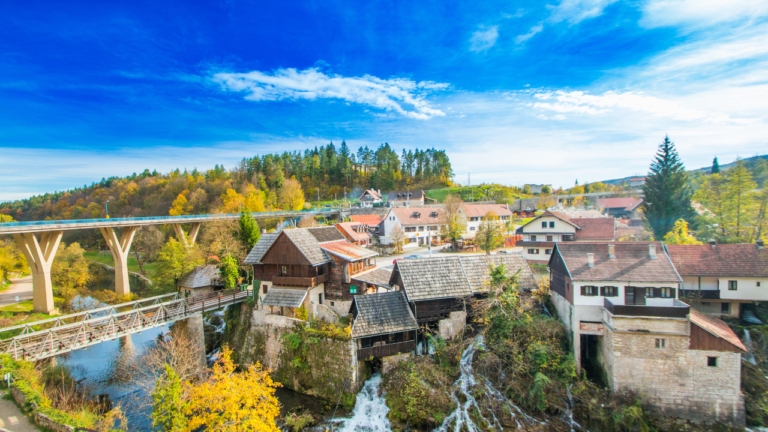
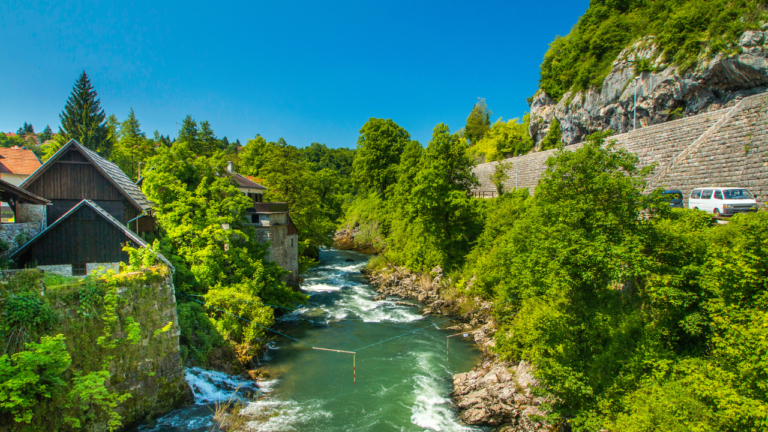
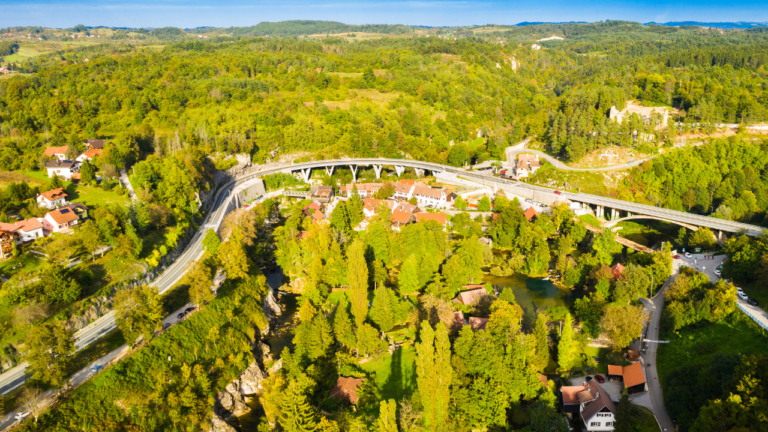
On the road between Plitvice Lakes and Zagreb lies a place where the river seems to flow through almost every backyard. Here, the Slunjčica River cascades over tufa barriers towards the Korana River, creating waterfalls, rapids and small streams surrounded by traditional houses and watermills. And at night? That is when the fairies emerge from their hiding places and celebrate the area’s rich world of water!
– This is Rastoke, a magical village also known as the Little Plitvice Lakes.
What Can You See in Magical Rastoke?
The most famous sights in Rastoke are the waterfalls and tufa barriers of the Slunjčica River, old watermills, bridges and traditional riverside houses that make this place so enchanting. In the surrounding area of Slunj, it is also worth exploring the untouched nature the region is so proud of, as well as the historic Gradina fortress and the swimming spots of Kotlac and Pod oltarom.
There is plenty to see in Rastoke, making it an ideal destination for a perfect day trip!
But how did Rastoke get its name?
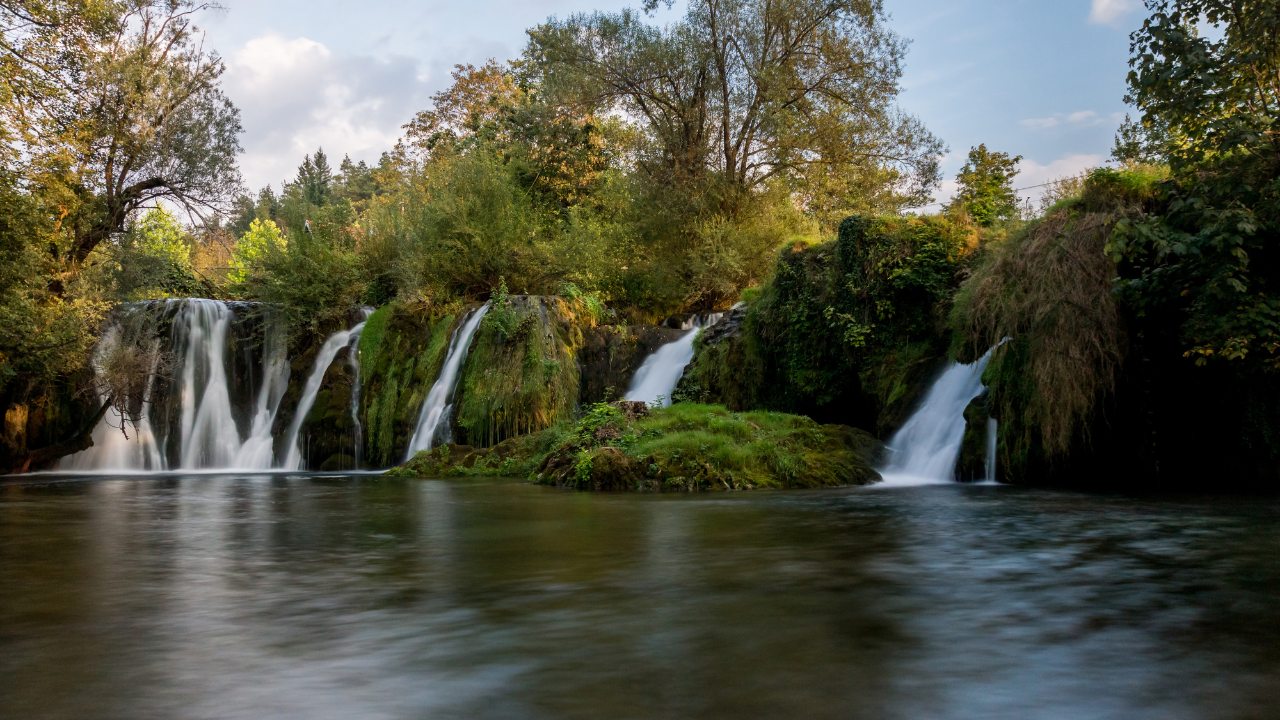
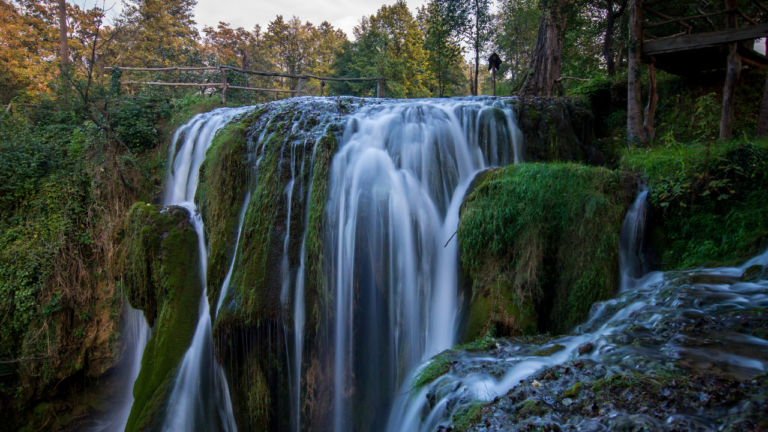
The name is no coincidence. Before flowing into the Korana River, the Slunjčica literally spreads and breaks apart (“rastače”) across tufa barriers, dividing into numerous waterfalls, cascades and streams. This is how the landscape we know today as Rastoke was formed in a relatively small area.
In Rastoke, more than 23 waterfalls and numerous tufa barriers overcome a difference in elevation before the Slunjčica joins the powerful Korana River. Tufa is a type of rock formed by the deposition of calcium carbonate from water, and it continuously grows and changes under the influence of water, plants and microorganisms.
This is why Rastoke changes its appearance, at least slightly, from year to year – and why it is always worth coming back.
Watermills Powered by the Swift Slunjčica River
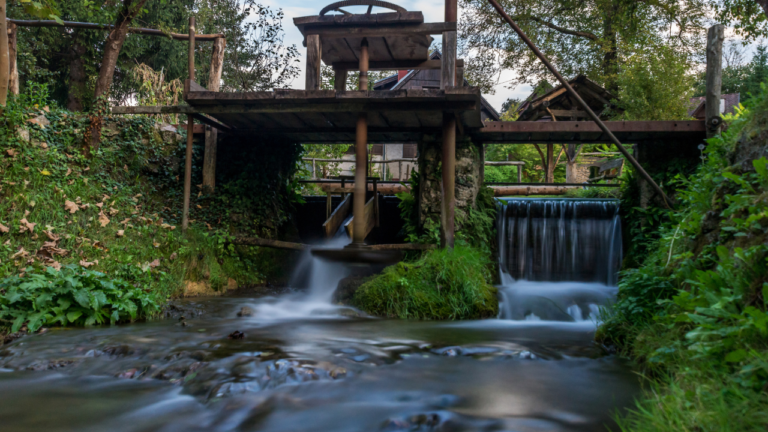
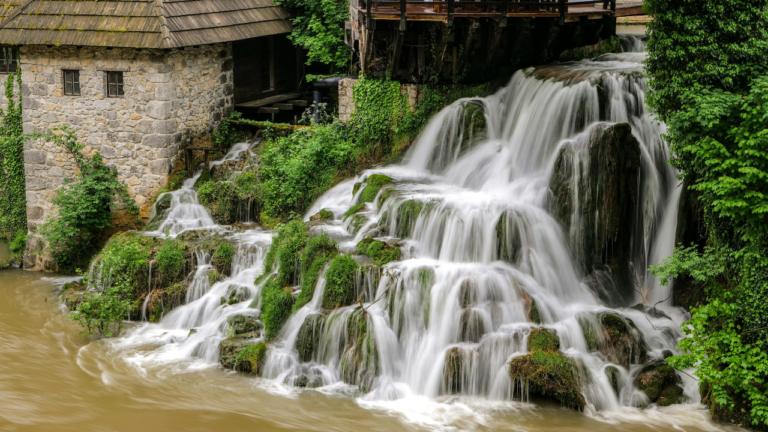
For centuries, the power of the Slunjčica River drove the watermills that now create postcard-perfect scenes. Grain was ground in the mills, while the river was also used for washing clothes. Some local families still produce flour today, keeping the tradition of Rastoke alive. During your visit, take the opportunity to meet local producers and admire the impressive old watermills along the river.
* Fun fact: before washing machines, wooden “baskets” were used in the river, allowing water to flow through them. Clothes were placed inside, and the current continuously turned and rinsed them. In Rastoke, the natural power of the river once did the work we now associate with household appliances.
The Fairies Come Out at Night…
For generations, stories have been passed down in Slunj and the surrounding area about fairies who lived near springs, rivers, forests and caves. According to local folklore, they were beautiful but unpredictable and seemingly everywhere, which is why one of the waterfalls in Rastoke bears their name – Vilina kosa.
One of the best-known local fairy legends tells the story of the millers of Rastoke and their horses:
According to one of the best-known legends of Rastoke, people who brought grain to the mills often had to leave their horses there overnight because there was not enough time to grind all the grain during the day. In the morning, they would return for their flour and horses, only to find an unusual sight: the horses were tired, breathless and wet, as if someone had ridden them throughout the night, while their manes had been braided into plaits. There could only be one explanation – during the night, the fairies had taken the horses for a ride.
…And even today, there is a belief that silver-haired fairies visit Rastoke at night and rest in its peaceful natural surroundings.
These stories of fairies are part of the area’s oral tradition and have been preserved through the stories passed down by families who lived here. You can explore them during your visit – and perhaps you might even catch a glimpse of a fairy yourself. 🙂
Rastoke as a Stop on the Way to Lyra Hotel Plitvice
You do not have to save Rastoke for a separate day trip. Its location is one of the reasons why it is so easy to include in your journey. If you are travelling from Zagreb towards Lyra Hotel Plitvice, Slunj is an ideal place to take a break before continuing towards the national park. Instead of driving the entire route in one go, you can break up the journey with a walk among the waterfalls, lunch by the river or a coffee overlooking the Slunjčica.
The same applies in the opposite direction. Rastoke is an ideal stop on the way to Plitvice Lakes or Zagreb.
And there is a third option: simply come to Rastoke without a particular plan. Just 28 kilometres from Lyra Hotel Plitvice, Rastoke are close enough to turn your stay in the heart of Ličko Petrovo Selo into a wonderful adventure in Slunj.
What Else to See in Rastoke?
If you have already made your way to Rastoke, there is no need to get straight back into the car after your walk and head back towards Plitvice Lakes. Slunj may be small, but it is home to many hidden spots worth exploring. So, what else can you see?
1. Old Town of Slunj – Gradina
This medieval fortress, associated with the Frankopan family, stands on a rock above the Slunjčica River, which surrounds it on three sides. The view of Slunj and the river from here is one of the best in town. On the way to the fortress, you will pass the monument to Milan Neralić, the first Croatian Olympic medalist, as well as the town’s oldest square.
2. Kotlac and Pod oltarom Through Jelvik Forest
Behind the fortress stretches Jelvik Pine Forest, where locals come to run, exercise and enjoy the shade of the trees. Follow the path through the forest for around twenty minutes and you will reach two smaller swimming spots: Kotlac, a shallow section of the river with a series of small cascades where local children learn to swim, and Pod oltarom, a grassy, sandy spot with several rocks that are perfect for jumping into the water.
If you visit Rastoke during the summer months, consider taking a refreshing dip in the river.
3. Jareb Watermills and the Quiet Side of Slunj
The Jareb family still mills and sells locally produced flour in a watermill that operates in the same way it did 300 years ago. Looking for a bag of traditionally produced local flour? Make a stop in Rastoke!
Beyond the mills, a new stone bridge across the Korana leads to a part of the area that few tourists ever notice: a quieter landscape of gardens and fields stretching along the water. If you are up for a slightly more challenging route, this is the path to take.
Rastoke is one of the most fascinating places to visit near Plitvice Lakes. It is a place where waterfalls, old watermills and stories of fairies intertwine with the rich history of Slunj. Discover what to see in Rastoke, how the Slunjčica River shaped the landscape, why watermills were once the heart of local life, and which legends and lesser-known curiosities are hidden in this fairytale village. A perfect day trip when staying at Lyra Hotel Plitvice!
Plitvice with Kids: Where to Stay and What to See?
Plitvice with kids can be so much more than a one-day visit to the lakes. With a little planning and a few interesting places to explore nearby, the whole family can enjoy nature, discovery and quality time together. Find out what to see, how to prepare for your trip and why Lyra Hotel Plitvice makes the perfect base for a family getaway.
Lyra Hotel Plitvice: The Perfect Stopover on Your Journey
Who says your holiday only begins once you arrive at your destination? The journey to the coast can be just as relaxing and rewarding when you include memorable stops along the way. Discover why Lyra Hotel Plitvice is the perfect stopover, explore the beauty of Plitvice Lakes National Park, and uncover more must-visit attractions in the heart of the Lika region.